

SafePoint IT Named to the 2026 Inc. 5000 List
SafePoint IT has been named to the 2026 Inc. 5000 list, the annual ranking of...

One of the most critical rules regarding cybersecurity is having a complex password to keep your data secure. Easy-to-guess passwords, such as "123456" or "password" or even something like “PeterB1972” pose a significant security risk as they require minimal effort for hackers to crack. More specifically, a common attack hackers use is brute force attacks. These attacks involve systematically trying all possible combinations until the correct password is found, which has cost them a lot of money. For example, Dunkin’ Brands group was fined $650,000 after agreeing to settle a lawsuit with customers. Essentially, the company was compromised by a brute force attack that compromised and stole money from thousands of customer accounts.
Are you concerned about whether or not your business passwords are complex enough?
In this article, we will discuss one way you can check whether your passwords are vulnerable to attacks using a “brute-force calculator” that can give you the amount of time it would take for a hacker to crack your password when trying every combination possible until a match is found.
This calculator follows a straightforward formula: it will take the possible combinations for a particular password. Then, the calculator divides that by the number of password attempts that some computer's hardware is capable of executing in a single second. (proxynova).
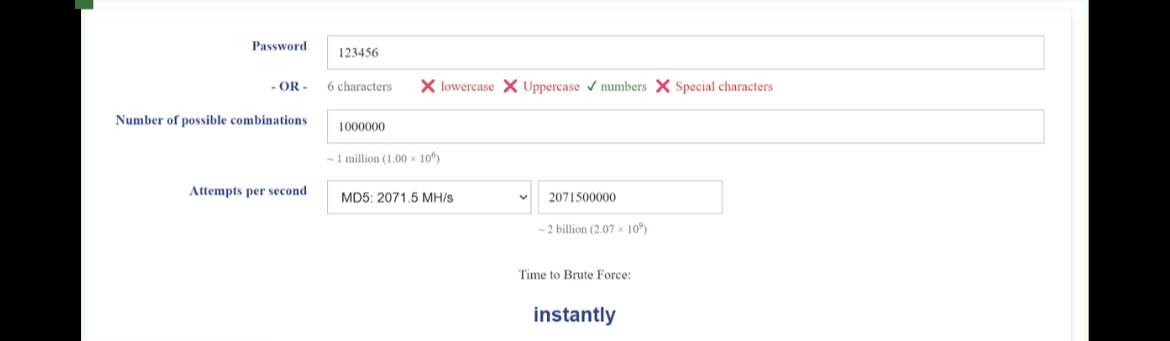
Consecutive number patterns will be figured out instantly.
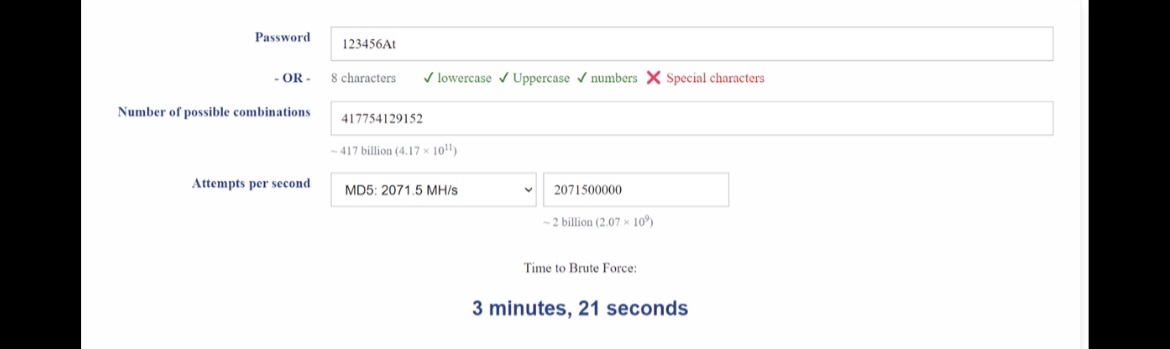
Consecutive number pattern with lower/upper case letters.
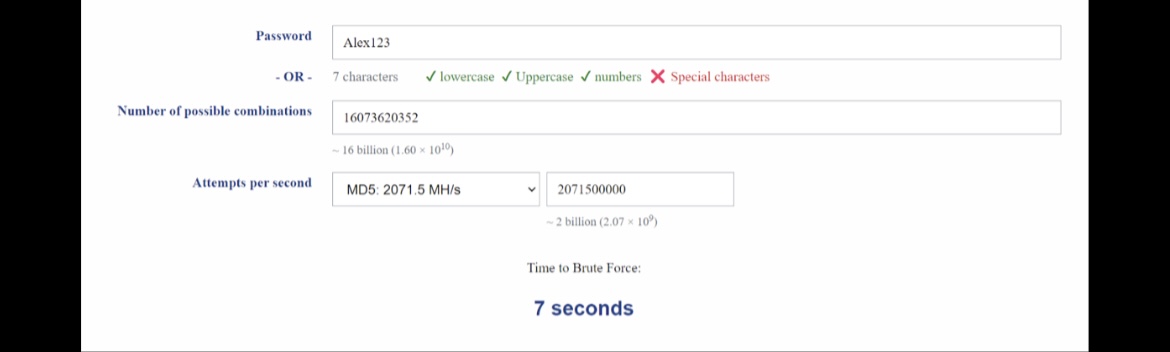
Personal information such as “name123”
Personal information such as birthdate;
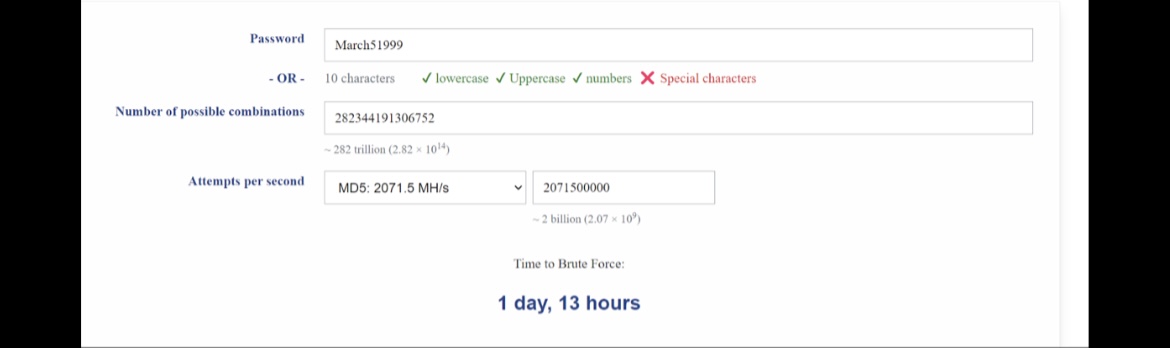
Personal information such as birthdate with a special character added.
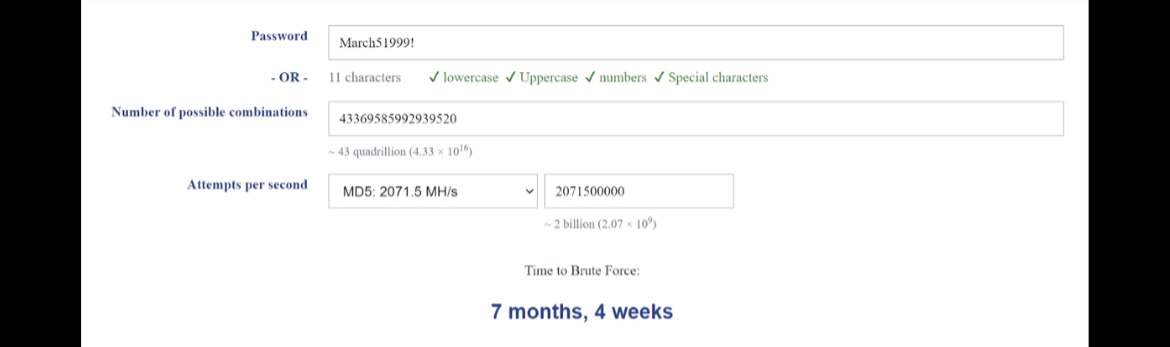
Lowercase, uppercase, numbers, and special characters
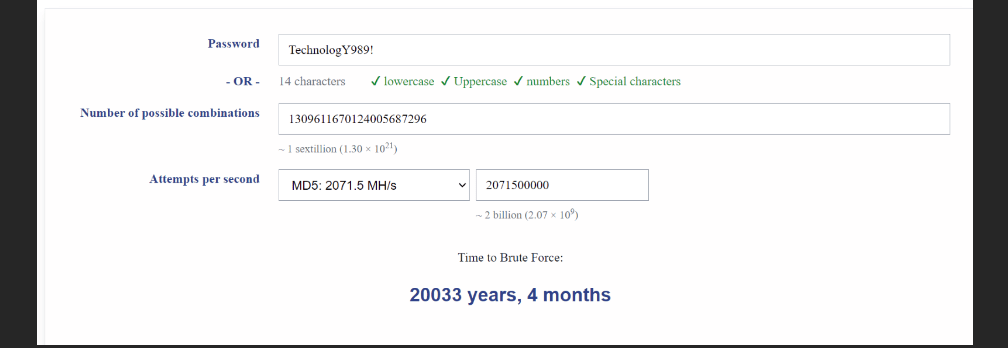
Without special characters
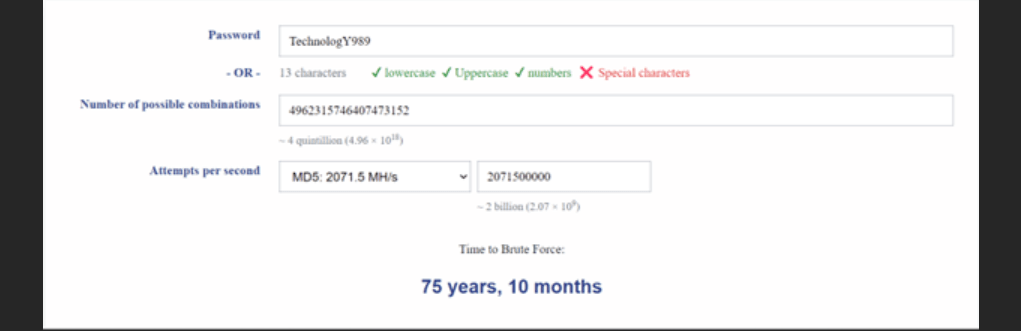
With thorough research, this calculator is legit. However, its accuracy also depends on what kind of computer is used to do the brute force. These calculations only go off of a few options that are available on AWS. This means that attackers can use more powerful computers or a combination of multiple computers to do brute force, which would significantly speed things up.
Overall, if you are creating a password or have existing passwords that you would like to check to see if they are not vulnerable to a possible brute-force attack, this is a good tool to experiment with. This calculator also proves that special characters, lowercase/uppercase, numbers, etc., is the thin line of whether your passwords are secure or vulnerable to an attack by hackers.
If you want to experiment with this tool, I have provided the link here.